
This led primary has extra breaths getting in and out of the poses and modifications are offered. It was recorded in Crete at Yoga Rocks in May 2019
Energetic Body Yoga Nidra recorded in Crete to the sound of the sea
Here is a 20 minute Yoga Nidra - enjoy!
Opening and Closing Chants of Ashtanga
Here is an article I wrote about the Ashtanga Opening Chant in Elephant Journal - it's THE most popular thing I've ever written!
Here is a vid I did of the Ashtanga Opening Chant with each line repeated twice and the words written underneath.
Here is an article I wrote about the Ashtanga Closing Chant
And finally an article about chanting in general
Here
Vinyasa Flow Recording
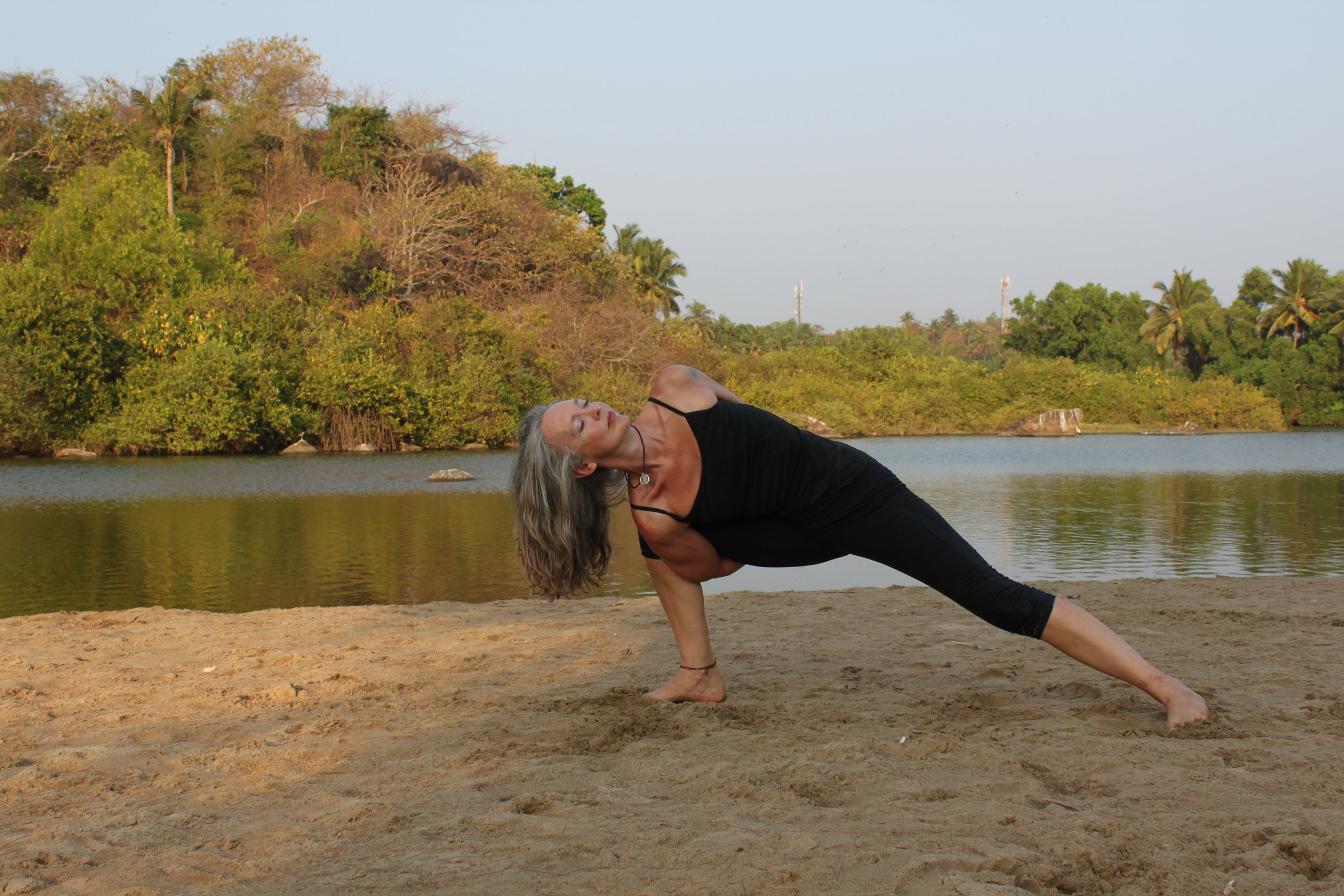
Here is a recording of a Vin Flow class from Goa - enjoy!
Meaning of Om
At my retreat at Yoga Rocks in Crete we recorded a continuous Om. At the beginning I give a brief explanation of Om
Moon Days
Upcoming Moon Days 2015/2016
There is no class on Moon Days. Why? Read more here.
2015
December
Friday 11 ● new moon
Friday 25 ○ full moon
2016
January
Sunday 10 ● new moon
Sunday 24 ○ full moon
February
Monday 8 ● new moon
Monday 22 ○ full moon
March
Wednesday 9 ● new moon
Wednesday 23 ○ full moon
April
Thursday 7 ● new moon
Friday 22 ○ full moon
May
Friday 6 ● new moon
Saturday 21 ○ full moon
June
Sunday 5 ● new moon
Monday 20 ○ full moon
July
Monday 4 ● new moon
Tuesday 19 ○ full moon
August
Tuesday 2 ● new moon
Thursday 18 ○ full moon
September
Thursday 1 ● new moon
Friday 16 ○ full moon
October
Saturday 1 ● new moon
Sunday 16 ○ full moon
Sunday 30 ● new moon
November
Monday 14 ○ full moon
Tuesday 29 ● new moon
December
Wednesday 14 ○ full moon
Thursday 29 ● new moon
What is that popping sound?? New Research! →
Yoga Nidra Resources
Yoga Nidra is one of my favourite practices. It is a form of meditation that is practiced lying down. The idea is to learn to access the state of consciousness between waking and sleeping – a new state of consciousness. In that place of transition there is an opening of new possibilities in terms of increasing awareness and refining consciousness and in terms of accessing the power of the sub or un-conscious aspect of the mind.
The Voice of a Yoga Teacher: how to make your voice your best teaching tool
A post on LoveYogaAnatomy about taking care of your voice. Very useful and so important!
Beginners Luck
An excerpt from my article about teaching beginners over at LoveYogaAnatomy.com.
Read the whole article here.
Teaching is a special skill and teaching beginners well is probably the hardest of all. Here are some of my suggestions for teaching beginners in a way that is positive and nurturing and compassionate.
Be Compassionate
Remember what it was like when you were a beginner. After years of practice it’s easy to forget how difficult yoga is. For beginners trying to work out what goes where and which way they are stretching and remember to breathe and and and… it can be pretty overwhelming. If you can get your beginners making roughly the right shape and at the same time remembering to breathe, then that’s a fantastic start – anything else is a bonus. Remember, it definitely doesn’t have to be perfect straight away and if you give too many corrections they may leave the class thinking they got everything wrong.
As a teacher it’s a great idea to go to a dance class or martial arts class, and be that beginner! Remind yourself what it feels like and how hard it is – but also how rewarding it is to get something right
How to survive a Yoga Teacher Training Course
An excerpt from an Elephant Journal article on Yoga Teaching Training survival techniques. Read the full article here.
I have been teaching on intensive teacher training courses in India for around 8 years.
Each year it strikes me that some of us jump right in with a huge smile on our face and love the whole experience. Others seem to spend far too much time crying in the toilets. Why the difference?
Here is some advice from me (plus a wealth of quotes from other yoga teachers) on how survive and thrive during yoga teacher training.
Decide which course is best for you.
The first decision you have to make is what kind of course will work best.
For some, family, work or financial commitments will affect the decision, but others will have to decide whether to do an intensive vs. longer duration course. Both have advantages and disadvantages.
A longer course would probably work best for those who prefer to learn slowly and like to have time to process new information. But for people already teaching with a pretty good grounding in a yoga practice, then jumping in to an intensive program might work best.
One of the best places to practice in London
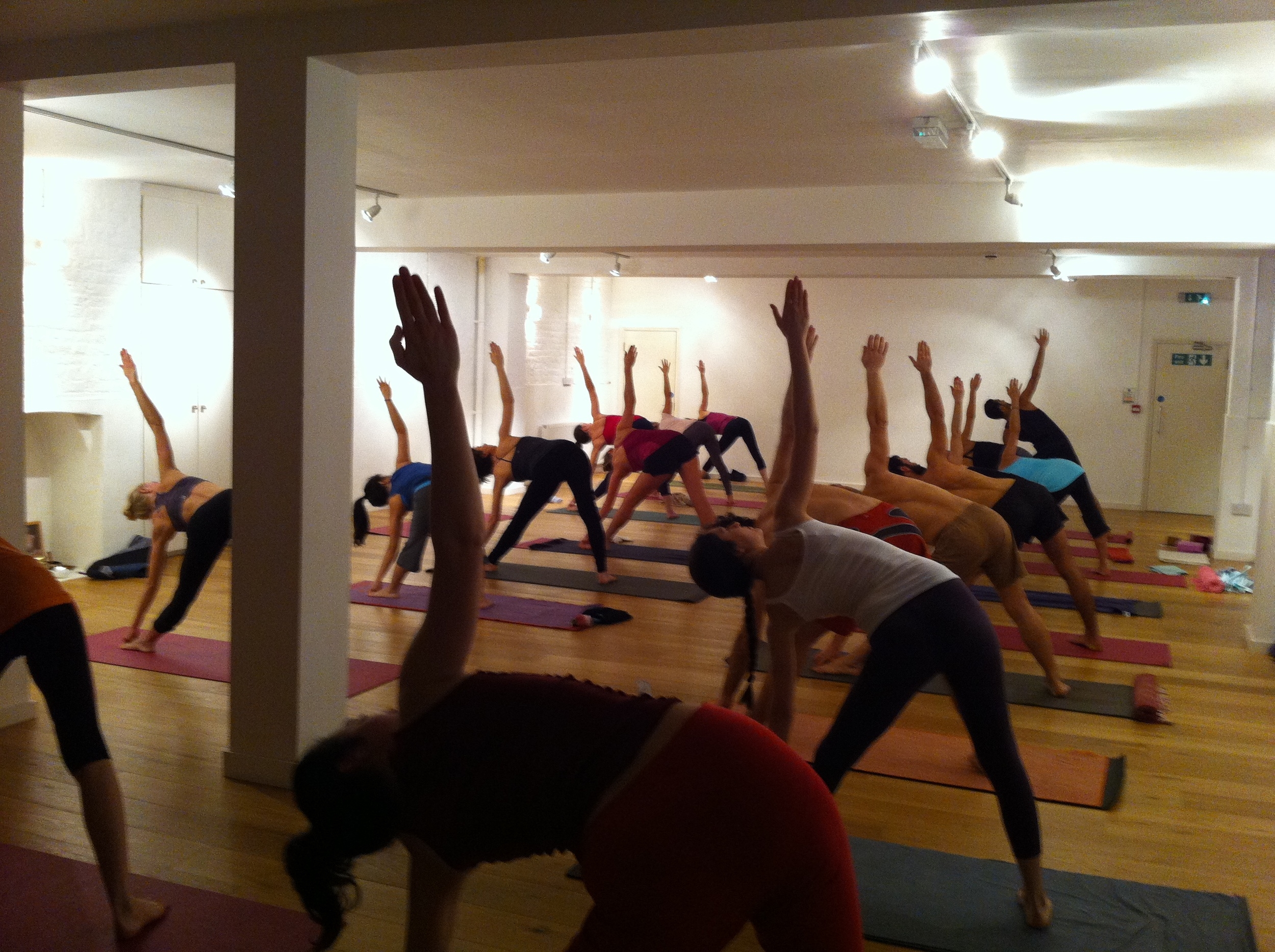
First Friday of the month led primary
The Evening Standard rates my morning self practice as one of the best places to practice in London.
Teaching Yoga, Adjusting Asana
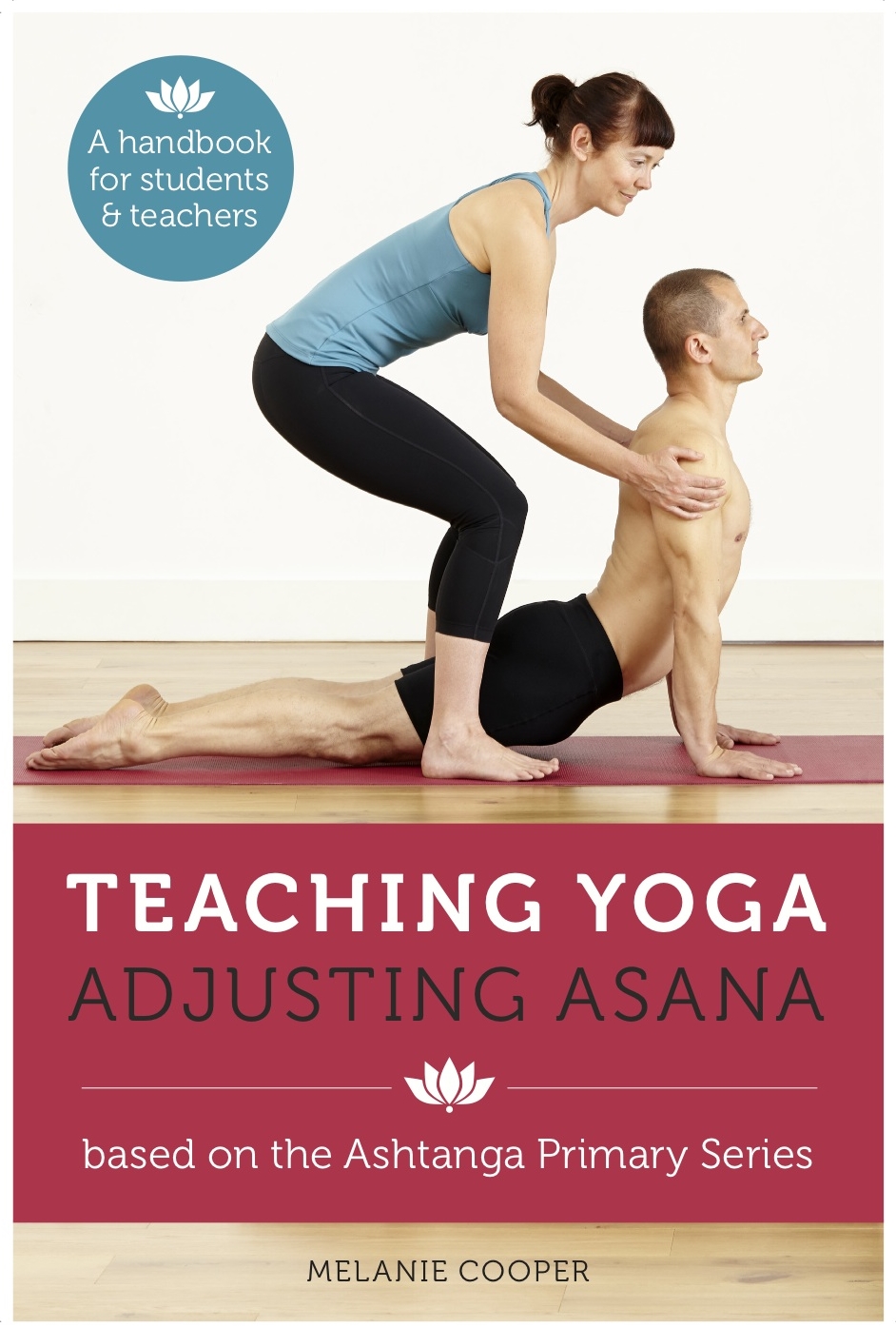
My first book Teaching Yoga, Adjusting Asana was published in Autumn 2013.
It is aimed primarily at new yoga teachers, but all the feedback I’ve received is that it is very useful for students in their own practice.
I really loved writing the book. I feel I have learned so much from so many great teachers over the years and it’s important for us all to share with each other and help each other. It felt like a real labour of love to try to distill the important things about teaching the practice into a book to share. There are very few books out there for teachers and I hope this book will inspire more teachers to write their own book.
You can read an excerpt from the book below.


- A review of the book by Anthony Grimmly
“Melanie is clearly an Ashtanga practitioner who loves her practice and devoted to it’s communication.”
Excerpt from Teaching Yoga, Adjusting Asana
INTRODUCTION
This book is primarily about teaching yoga and contains much information that will be of interest and use to teachers and students of all styles of yoga. I am an Ashtanga teacher and so the book is based on the Ashtanga Primary Series.
Before I go any further I want to state clearly that this book is not about Ashtanga yoga as it is traditionally taught in Mysore, and I am not trying to give the ‘correct Mysore point of view’. I have the utmost respect for Pattabhi Jois and Sharath and their teaching methods. I was taught myself mainly by a teacher who remains very faithful to the traditional style and I am very grateful and consider myself very lucky to have been taught this way. I have also studied in Mysore with Pattabhi Jois and Sharath and completely loved the experience and gained a huge amount from it, but I do not pretend to speak for them and they have not endorsed this book.
I think that there is no doubt about the authenticity and integrity of Pattabhi Jois and Sharath. Their teaching method has produced some of the most accomplished, knowledgeable and sincere yoga practitioners around today, but the reality facing most new yoga teachers is that most of their classes are in gyms where it is not possible to teach in the Mysore style. Most of these classes are only one hour long and open to all levels. Most of the students are practising only once or twice a week. In this situation a new way of teaching Ashtanga has emerged – a general led class – and this is what this book is about, but it is my hope that this book will be useful to many different categories of yoga practitioner.
So, firstly this book is for newly qualified teachers teaching in gyms. I have been there myself and I know the frustrations and joys of teaching in this way. It is not an easy path – it can be immensely rewarding but also hugely frustrating. The fact that yoga in gyms has thrived for nearly two decades is testament to the huge benefits yoga has to offer, and the dedication and hard work of all the gym-based yoga teachers. We have seen many fads and fashions come and go in the gyms over the years and many attempts by the gyms to outdo us in our own territory, but yoga classes remain perennially popular. I hope this book will give you support, ideas and food for thought.
This book is also for teachers of all kinds of yoga. It is a source of sadness to me that some yoga teachers look more for the divisions between types of yoga rather than what we have in common. I feel we are all doing essentially the same thing but with different emphases to cater for all the different personalities and body types doing asana:
- We all do asana, pranayama, bandhas and dristi.
- We all have to deal with students and their injuries.
- We all have to work out how to communicate effectively.
- We all try to explain the spiritual aspects of yoga.
- We all have to deal with the same ethical difficulties and dilemmas.
- The chapter on deepening the primary series gives ideas for workshops that would work for many styles of yoga.
- The adjustment chapter is applicable to all who would like to start working in a more hands-on way with their students.
I hope there is much in this book that will help and inspire teachers of many forms of yoga.
I also hope that students of yoga will find much of help and interest here. The in-depth information about the breathing, bandhas and dristi could help students of any level deepen their practice and their understanding of yoga in general. This applies especially to more advanced students who are thinking of starting to teach and those already on teacher-training courses.
The feedback I have received from people who have read this book during the editorial process has been very positive. The book has been tried out by newly qualified and more experienced yoga teachers, and by students both beginners and more experienced. All of them found information and ideas that were helpful and interesting and useful to them in their practice and teaching.
The book is basically in two parts: Chapters 1 to 7, which focus on the process of teaching as a whole; and Chapters 8 to 11, which are primarily practical and relate to the individual asana. Chapter 1 gives general information about various important aspects of teaching. Chapters 2, 3 and 4 cover the breath, bandhas and dristi. For each of these you will find basic information about technique, contraindications and benefits, as well as ideas about how to teach it. Where relevant, the information is divided into scientific aspects and more yogic aspects and wherever possible I have included references to scientific studies or yogic texts. Chapter 5 covers injuries – how they are caused, how to prevent them and how to work with students who are injured. In Chapter 6 I give some ideas about how to teach the spiritual as- pects of yoga and Chapter 7 explores the ethics of yoga teaching through the structure of the yamas and niyamas. Chapter 8 deals with teaching points: what to say, how to say it and ideas for phrases for each asana in the primary series. In Chapter 9 the whole primary series is given with the Sanskrit count. This gives the breath and movements into and out of each pose in the primary series. In Chapter 10 I give various stretches and strengthening exercises that can help students to work on the primary series and ideas for how to put these together for workshop-style classes. The final chapter of the book deals with adjustments. First I give some background about why we adjust, how adjustments work and how as teachers we can make it as safe as possible. Then for each posture, you will find photographs of the adjustment and succinct clear instructions of how to carry out the adjustment.
As a teacher, it is a good idea sometimes to choose a focus for a class. For example, if you have noticed that your students do not seem to be breath- ing properly, you could teach a whole class focused on the breath. Read the relevant chapter on breathing. Look for three pieces of information to emphasise during the class (if you try to give too much information, people tend to go into brain overload and switch off). Maybe choose one scientific way in which the special breathing can benefit the body, one of the yogic ways in which breathing affects the body and one of the breathing exercises. Take some time in the class to talk about the breath in more depth, explain clearly how to do it, why we do it and what the benefits are. I find if students know why they are doing something, and understand the theory behind it, they are more likely to carry on doing it.
If you feel you are always saying the same things and worry that you are lacking in inspiration, look at the teaching points. These are given in the chapters on breath and bandhas, as well as in Chapter 8, which is devoted exclusively to teaching points. Do not necessarily take my points and copy them, although this could be a good way to start, but use them for sparking ideas and themes in a class. For example, you could teach a whole class focused on the foundation and the use of the hands and feet (see Chapter 8).
If you want to learn more hands-on adjustment work, get together with two yoga friends. One of you will be reading out instructions, one will be the student and the third will be doing the adjustment. Try two or three asana in a session and follow the instructions given in Chapter 11. Experiment with different levels of pressure and what feels good. Then try the adjustment on a student you know well, and build up slowly from there.
All this is in no way meant to replace a teacher-training course or study with a senior teacher. It is intended as a supplement to give you ideas and inspiration and help you find your voice as a teacher. I taught for seven years before going on a course. I made it up as I went along and learned by my mistakes. My classes were busy and popular and no one died, but my teaching definitely improved a huge amount after I went on my teacher-training course – I highly, highly recommend it.
My intention in writing this book is to share and pass on information and ideas I have gathered in nearly two decades of practising and teaching. I learned from my teachers and students and I have a huge desire to share this learning. I find the process of teaching very satisfying and in teaching I learn myself.
The Ashtanga Opening Chant
One of the most well read articles I've ever written. To read the full article visit Elephant Journal here.
The Ashtanga Opening Chant is written in Sanskrit, transliterated it goes like this:
OM
Vande Gurunam Caranaravinde
Sandarsita Svatma Sukhava Bodhe
Nih Sreyase Jangalikayamane
Samsara Halahala Mohasantyai
Abahu Purusakaram
Sankhacakrasi Dharinam
Sahasra Sirasam Svetam
Pranamami Patanjalim
OM
If you want to hear it chanted there are many versions on YouTube. If you want to learn it, I have version on my website of me chanting each line twice with the words written on the screen.
The opening chant of Ashtanga is translated on the Ashtanga Yoga Research Institute website as:
I bow to the lotus feet of the Gurus,
The awakening happiness of one’s own Self revealed,
Beyond better, acting like the jungle physician,
Pacifying delusion, the poison of Samsara.
Taking the form of a man to the shoulders,
Holding a conch, a discus, and a sword,
One thousand heads, white,
To Patanjali, I salute.
The two verses of the chant come from different sources. The first verse is part of a longer poem called the Yoga Taravalli written by Adi Sankara, and is said to be one of Krishnamacharya’s favorites.
Led Primary Recording
Two recordings of the primary series for home practice. Recorded on my Yoga Teacher Trainings in Goa, complete with birds for ambience.

Led Primary at Brighton Yoga Festival 2016

Led Primary Brighton Yoga Festival 2016